
Felisi



Felisi: A quiet icon between patina and precision
There are brands that shout – and there are brands that whisper, but whose impact lingers all the longer. Felisi belongs to the latter category: a signature brand from Ferrara, born in 1973, that combines Italian leather craftsmanship with technical intelligence, thereby radiating an almost understated confidence. Its history is well-documented: from a small workshop in the old town, it has grown into a "totally made in Italy" house that concentrates its design, material selection, and production in Ferrara and has been expanding for decades with a loyal, discerning clientele – particularly in Europe, the USA, and Japan.
The coat of arms – a shield with a lush tree laden with golden apples – is more than mere decoration. It references the heraldic tradition of a noble family from Ferrara; Felisi uses it as a trademark and a promise of groundedness, fertility, and continuity. Behind this symbolism lies not a fashionable gesture, but a conscious affirmation of heritage.
Felisi bags
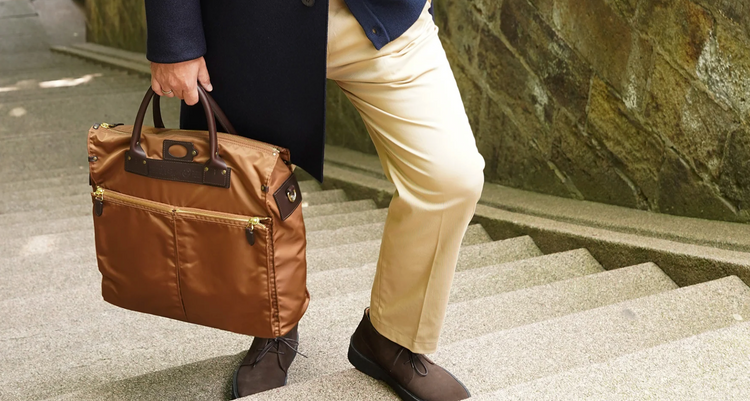
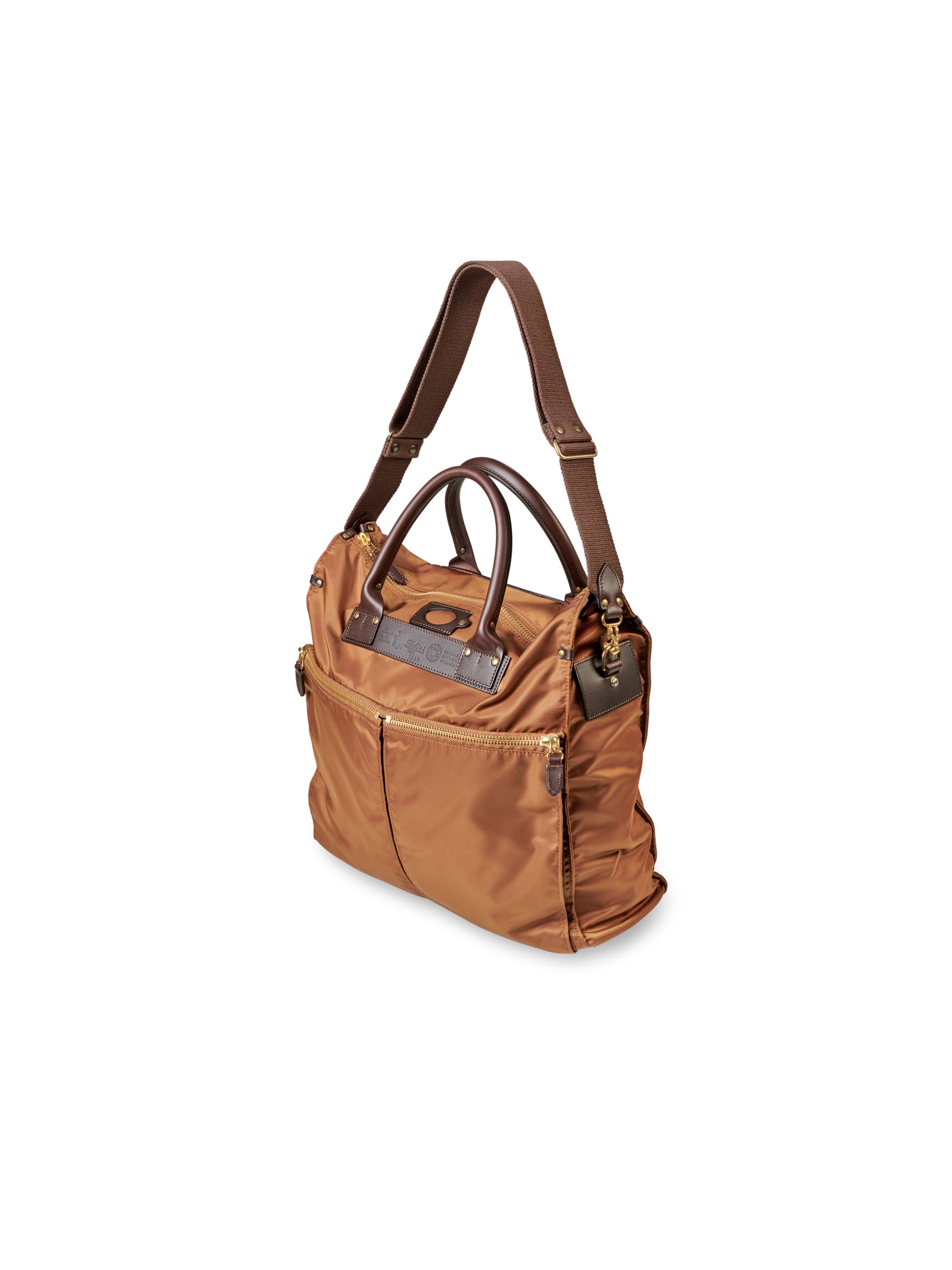
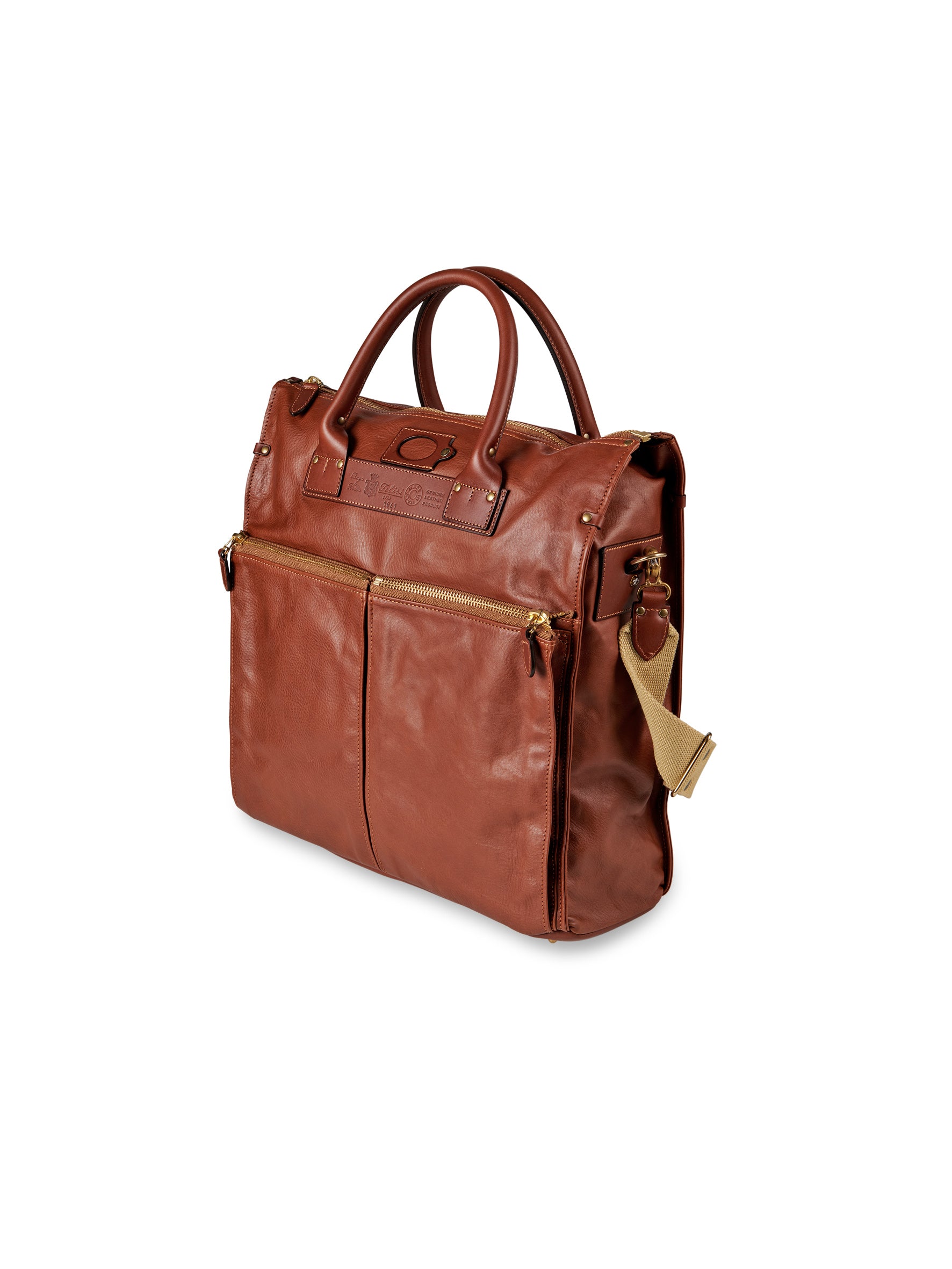
Those who carry Felisi bags experience the serenity of a product designed for everyday life and built to last for years. The material language is unambiguous: vegetable-tanned leather – resistant, tough, vibrant – meets cotton canvas or technical nylon , the constants of every collection. Metal parts are not mere decoration, but material: genuine brass, warm in tone, robust in use, which, like leather, develops a patina over time. These facts are not a myth, but part of the company's openly communicated material philosophy.
The idea behind it is as simple as it is sophisticated: a bag should not only carry things, but also change with its owner – in shape and color, in the sheen of its edges, in the depth of the leather. Felisi explicitly states this as a mark of quality: accessories become "part of the person" and gain character through use. In this way, the brand consciously distinguishes itself from flawless, but soulless, surface perfection. Patina here is not a flaw, but a mark of distinction.
The craftsmanship is evident in the workmanship. That Felisi manufactures entirely in Italy and concentrates its expertise in Ferrara is not just marketing – it's a structural reality that gives the brand consistency. The garments are sewn from select leathers, combined with nylon or canvas in a wide variety of colors and materials. This creates a balance between city life and travel: robust enough for train stations, elegant enough for the parquet floor, and light enough for long days.
Looking at the collection, one recognizes the archetypes: messenger and shoulder bags with precise edges, totes with clear, vertical proportions, briefcases that accommodate a laptop as easily as a portfolio. Felisi explicitly describes men's bags as "adventure companions"—not with the pathos of an expedition catalog, but as a matter-of-fact statement: these objects are meant to be accompanied. Those who go to the office in the morning and continue their journey in the evening will appreciate the understated organization, the reliable zippers, the sturdy seams, and the soft yet durable surfaces.
The handling of textiles is remarkable: the technical nylon – with its classic, tightly woven feel – remains consistent across seasons; cotton canvas, inspired by the historic Tela Olona , lends a matte texture reminiscent of nautical gear. Both are finished with vegetable-tanned leather that gains depth over time. Brass components – buckles, eyelets, sliders – are custom-designed for Felisi and age visibly. The result is an aesthetic that doesn't conceal aging, but rather choreographs it.
Why is this relevant? Because Felisi bags don't just carry things, they carry values: durability, repairability, and material honesty. In a culture that often oscillates between "loud luxury" and purely functional tech pouches, Felisi asserts a third way: discreet practicality with feeling. It's the kind of bag you hardly notice on the train – until you can't forget it.
Felisi Online Shop
Those who want to experience Felisi don't need to travel to Ferrara – although the first store, located on one of the city's most exclusive streets, is worth the pilgrimage. The Felisi online shop provides the official reference: sorted by women's and men's, with categories ranging from bags and belts to wallets, keychains, beauty cases, and travel luggage. Particularly helpful: the brand documents materials, origin, and philosophy on dedicated information pages – a level of transparency that is by no means a given in the world of accessories.
The website itself is part of the promise. It operates under the name "Felisi by Anna-Lisa Felloni sas," based in Ferrara – including complete company information. This type of legal notice creates the reliability that is crucial for high-quality leather goods. The digital presence is complemented by editorial content: "How a Felisi creation is born," "Philosophy," "History" – pages that explain the creation process, the craftsmanship, and the development of the brand. Anyone wanting to know why brass isn't just a trend here, but a matter of logic, will find the answers there.
Those who prefer a physical experience will find the original Felisi store in Ferrara – a leather goods shop in the heart of the city that carries its own selection as well as curated "research brands". This shop embodies, in a very small space, what the brand promises online: craftsmanship as a lifestyle.
In short: The felisi online shop is not just a source of supply, but a source of knowledge – a place where you can understand the product before you own it.
Felisi Bags
"Bags" is the key word, but Felisi conceives of bags as an ecosystem – from the desk to the gate, from the café to the evening meeting. Crucial is the interplay of vegetable-tanned leather , technical nylon , and canvas . The brand explicitly names these building blocks and keeps them present across seasons: nylon as a constant, canvas in reminiscence of the historic Tela Olona . This is not a random mix, but a material grammar that balances weight, durability, and feel.
Anyone who holds a Felisi in their hand notices the difference at the edges: lovingly finished seams, edges that are not only beautiful but also durable, and fittings made of genuine brass – specifically designed to function and age gracefully. This aging beauty is part of the product's authenticity. Felisi clearly states that each accessory becomes "more personal and unique" over time. Many brands promise this, but few live it so openly.
The collection itself covers scenarios rather than target groups. Men's bags are described as "suitable for any situation"—on the playing field, in the office, on the go. That sounds generic, but in practice it's quite concrete: a messenger bag with a padded main compartment and a well-organized interior; a tote that carries documents and a light jacket without collapsing; a briefcase that securely but not shabbily holds a laptop. The overall feel: urban, but not cold; functional, but not clinically sterile.
Why Felisi instead of a generic "minimalist" label? Because here, Italy isn't just a postcard image, but a guiding principle of production. The brand emphasizes its "totally made in Italy" manufacturing and the consolidation of planning, design, material selection, and production in Ferrara – a rare degree of vertical integration that ensures quality. This also explains why Felisi has such a strong presence in Japan: there, brands that combine tradition, material expertise, and understated elegance are highly valued.
In its visual program, Felisi demonstrates that bags are not merely tools, but companions for life – whether you're wearing jeans and sneakers today, or a blazer and loafers. The best Felisi bag is the one you recognize after years – by the matte handles, the fine lines the leather has drawn along the edges; by the brass that has witnessed its journey. Not perfect, but authentic.
Felisi Weekender
Traveling means condensing your life for a while. A Felisi Weekender – often called the "Boston Bag" in the Japanese range – thinks exactly like that: enough space for two to three days, but compact enough for carry-on luggage (airline rules vary; tip: check beforehand). What counts with Felisi is the combination : lightweight, dense nylon or sturdy canvas ensure portability, vegetable-tanned leather provides structure and durability; brass adds a mechanical touch – zipper pulls, rings, eyelets that will still work after years.
On the official website, the category is listed under "Valigie" or "Men's suitcases" and showcases Felisi's approach to travel: technical nylon in rich colors, tonal leather trim, clean silhouettes that look neither like a sports bag nor a briefcase. These travel companions are designed to age gracefully without losing their shape—the structure remains, the surface gains depth. This is the quiet luxury of the Felisi weekender : not ostentation, but enduring quality.
From a materials science perspective, a look behind the scenes is worthwhile: Felisi explains that technical nylon is a constant in the collections, and canvas is produced in the style of traditional Tela Olona – a reference to nautical robustness. This is complemented by the fact that all metal parts are genuine brass , which visibly ages. The result is a travel companion that doesn't aim to "stay new," but rather to "get better."
A cultural footprint? Japan. There, Felisi has established itself over decades – not as a fashion fad, but as a reliable choice for city breaks and business trips. The separate Japanese Felisi online shop reflects this in a density of models and colors rarely found elsewhere. Anyone wanting to understand the brand should consider this perspective: it shows how deeply Felisi is embedded in a market that highly values material honesty.
Practical tip: When it comes to weekender bags, the internal logic determines everyday use. Felisi uses clearly defined main compartments, often supplemented by zippered pockets to secure small items, and shoulder straps that maintain balance, even when the bag is moving around. This isn't romanticism – it's precision that only becomes apparent when traveling.
Felisi belt
Felisi belts are the antidote to the throwaway accessory culture: they are crafted from calfskin, cowhide, or bull leather , often unlined for maximum suppleness, and fitted with buckles made of genuine brass – in natural tone or nickel-plated. This isn't just a retailer's claim, but verifiable on product pages. A closer look reveals exotic leather options (e.g., python) that showcase the breadth of craftsmanship.
The sizing system is impressive: Many models are made to order in the online shop – with clear size instructions (measurement without the buckle to the middle hole) and a production time of approximately four weeks . This is a practical manufacturing principle in the digital realm and explains why Felisi belts often "fit better" than mass-produced, ready-made belts.
Aesthetically, the belts range from minimalist (narrow 2-cm versions for flowing silhouettes) to bold (4-cm width for denim or chinos). The hardware is deliberately visible – not concealed zinc, but brass that ages alongside the leather. Those who wear belts like a tie – as the final, decisive touch – will find what they're looking for here. And those who view belts as a tool will also find what they're looking for: hole by hole, day after day, without haste, without drama.
Stylistically, Felisi belts work precisely because they are understated. A brown, vegetable-tanned leather with a subtle edge color complements both welted Oxfords and minimalist sneakers. A black, cleanly polished belt with a nickel-plated buckle looks just as good with serge trousers and cashmere as it does with a tailored Italian suit. For those seeking a bolder statement, there are braided models—soft, unlined, and extremely adaptable —or antique-finished leathers with depth. The range is signature to the brand and fully documented.
Ultimately, a belt is always a small promise of power. With Felisi, it holds true.
Felisi Bags: Selection, Care, Authenticity
In the end, what matters is what remains: a bag that not only carries things, but also tells stories. Felisi creates such companions – understated in appearance, precise in execution. Those who choose one are not deciding between "trend" and "timelessness," but between nuances of excellence.
Selection – the tone, not the volume
Those who prioritize function choose nylon : lightweight, durable, and resistant to inclement weather – the pragmatic choice for commuters, frequent travelers, and those who don't know where their day will end. Canvas provides visual warmth: a matte, natural grain that, combined with leather trim in muted tones, conveys a sophisticated casualness. Full-grain leather is the statement for purists: rich to the touch, contoured on the surface, with a depth that only time can create.
The difference lies in the feel. Nylon creates a clean, uncluttered look in a modern interior: simple, durable, and uncluttered. Canvas evokes studio lighting – it withstands wear and tear, transforming it into character. Full-grain leather is like a private library: it ages, but never does. It gains without losing. At Felisi , nylon and canvas aren't compromises, but rather deliberately chosen pillars; vegetable-tanned leather acts as the DNA that holds the mix together. The result: peace of mind. You don't choose against something, but for the role the bag plays in your life.
Therefore, don't think about your choices in terms of categories, but rather in terms of days. A workday with unpredictable weather? A nylon shoulder bag with a clean, organized interior. A weekend getaway? A canvas weekender with leather edges that withstand bumps and develop a beautiful patina. A business meeting followed by dinner? A full-leather briefcase that frames your silhouette, not dominates it. Felisi Bags don't dictate dress codes—they understand them. And they are worn alongside you, not forced upon you.
Nursing care – a 3-minute ritual instead of a substitute for religion
Vegetable-tanned leather thrives on rest and routine. A soft, dry cloth is all you need – remove dust, relieve tension on the seams, and you're done. Use conditioning cream or oil sparingly and only when necessary : apply it to specific areas when the leather appears dry, never out of habit. Too much care clogs the pores; too little leaves the surface dull. The truth, as so often, lies in good practice.
Brass is honest. It develops a patina – and that's the point. If you love the darker, lived-in surface, leave it alone. If you want shine, polish gently and not too often. Canvas and nylon benefit from gentle cleaning with a slightly damp cloth; dab stains, don't rub. Then: air dry, away from direct heat or sunlight. Shake out the lining occasionally, removing crumbs and sand – not just for tidiness, but because clean linings help maintain the shape.
The best care, in the end, is this: wear. Leather that is used in everyday life remains supple. Brass that is used ages beautifully. Materials that are allowed to work reward this – that's precisely what Felisi is designed for: objects that are allowed to age without becoming worn out.
Authenticity – the art of small pieces of evidence
True quality never feels rushed. This also applies to verifying that it's genuine Felisi . Pay attention to the understated details : clean edges, consistent stitch lengths, zippers that run smoothly. The leather feels dense and "alive," not papery or over-sealed. The hardware is high-quality —the brass feels warm to the touch, not hollow. Inside, the organization reveals the brand: thoughtful, but never cluttered; functional, never clinically cold.
Those who want to play it safe should buy from reliable sources. The official Felisi online shop is the benchmark in terms of materials and design; the Japanese presence complements the brand image with an impressive range of variations. When buying secondhand, a little quiet care is worthwhile: Do the materials and workmanship match? Does the crest appear to be embossed authentically, not just tacked on? Are the proportions typical of Felisi – clear and balanced rather than flashy? Authenticity here is rarely a single indicator, but rather the interplay of all these factors .
Ultimately, one simple truth remains: You recognize a genuine Felisi Bag by the feeling of not wanting to take it off. It disappears into everyday life – and is only noticed when it's missing. That's the kind of luxury you don't flaunt, but rather experience within yourself. Quiet luxury, in the best sense: understated, yet unmistakable.
FAQ about Felisi
Where does Felisi come from – and where is it produced?
Felisi was founded in Ferrara in 1973 and operates as a "totally made in Italy" brand, with planning, design, material selection and manufacturing taking place in Ferrara.
What does the coat of arms with the tree mean?
The Felisi coat of arms belongs to a noble family from Ferrara; the tree full of golden apples symbolizes the fertility of the lands – a heritage narrative that the brand uses as a signature on its accessories.
What materials does Felisi use?
Vegetable-tanned leather, technical nylon (as a collection constant), cotton canvas with reference to the historical Tela Olona , and genuine brass fittings – openly explained on the materials page.
Why is Felisi so prevalent in Japan?
The brand itself emphasizes its strong roots in Japan – evidenced by its own Japanese e-commerce presence and its historical presentation, which names Japan as its core market.
How do Felisi belts fit – and how do I order the right length?
Many belts are made to measure . Measurements are taken without the buckle, up to the middle hole ; production usually takes about four weeks . This information can be found on the product pages.